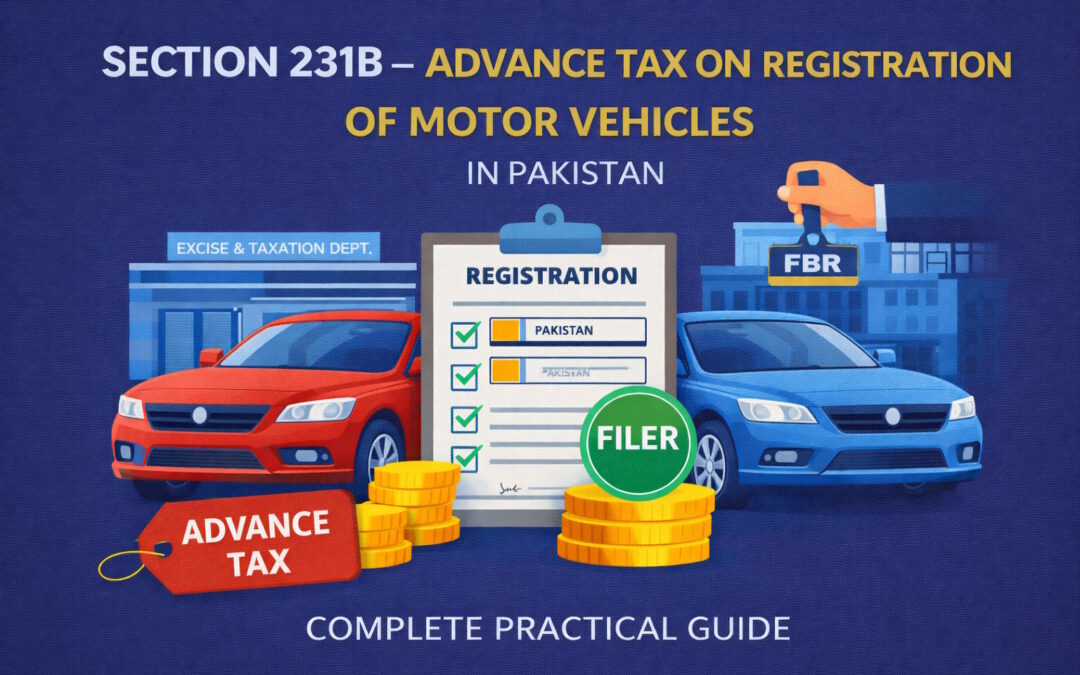
Pakistan Practical Taxation Course Post 14
Post 14
Section 231B – Advance Tax on Registration of Motor Vehicles in Pakistan
Introduction
Section 231B of the Income Tax Ordinance, 2001 deals with advance tax collected at the time of registration of motor vehicles in Pakistan. This provision applies to individuals and entities purchasing vehicles and aims to ensure tax collection at the point of high-value asset acquisition.
The tax is collected by Excise and Taxation Departments at the time of vehicle registration and significantly varies based on filer and non-filer status.
What is Section 231B?
Section 231B requires payment of advance income tax before registration of a motor vehicle in the name of the buyer.
Without payment of this tax, vehicle registration is not processed.
Who is Liable under Section 231B
Advance tax under this section applies to:
- Individuals purchasing cars, jeeps, or motor vehicles
- Business entities registering vehicles
- AOPs and companies acquiring vehicles
Both new and imported vehicles are covered under this provision.
Tax Collection Authority
Tax under Section 231B is collected by:
Provincial Excise and Taxation Departments
On behalf of the Federal Board of Revenue (FBR)
The tax must be paid prior to or at the time of registration.
Filer vs Non-Filer Tax Treatment
Tax rates under Section 231B differ significantly:
- Filers pay lower advance tax
- Non-filers pay substantially higher tax
Maintaining Active Taxpayer List (ATL) status can result in major tax savings when purchasing vehicles.
Basis of Tax Calculation
Advance tax is calculated based on:
- Engine capacity of the vehicle
- Vehicle type and category
- Filer or non-filer status of buyer
Higher engine capacity vehicles attract higher advance tax.
Nature of Tax under Section 231B
The tax collected under Section 231B is generally adjustable:
- It can be adjusted against final income tax liability
- Declared in annual income tax return
- Excess tax may be refundable
However, for non-filers, adjustment is only possible after filing returns and becoming active filers.
Exemptions and Special Cases
Certain exemptions may apply to:
- Government departments
- Diplomatic missions
- Specially notified persons or vehicles
- Disabled persons under prescribed rules
Supporting documentation is required to claim exemption.
Practical Impact on Taxpayers
Section 231B affects taxpayers by:
- Increasing upfront cost of vehicle purchase
- Encouraging income tax registration
- Promoting documentation of assets
- Linking lifestyle assets with declared income
Common Mistakes by Taxpayers
- Purchasing vehicle without checking filer status
- Assuming tax is non-adjustable
- Failure to claim adjustment in annual return
- Incorrect declaration of vehicle details in wealth statement
Relationship with Wealth Statement
Vehicles registered are part of declared assets:
- Must be disclosed in the wealth statement
- The source of funds must be explained
- Mismatch can trigger FBR notices
Conclusion
Pakistan Practical Taxation Course Post 14 FI
Section 231B ensures advance collection of income tax on motor vehicles and plays a vital role in asset documentation. Taxpayers should maintain filer status and correctly adjust this tax in their returns to avoid unnecessary financial burden.
Instructor
This Practical Taxation Course is prepared by:
Muhammad Taha Farooq
APFA | ITP
Previous Post Pakistan Practical Taxation Course Post 13
Next Post Pakistan Practical Taxation Course Post 15