Pakistan Practical Taxation Course Post 15
Post 15
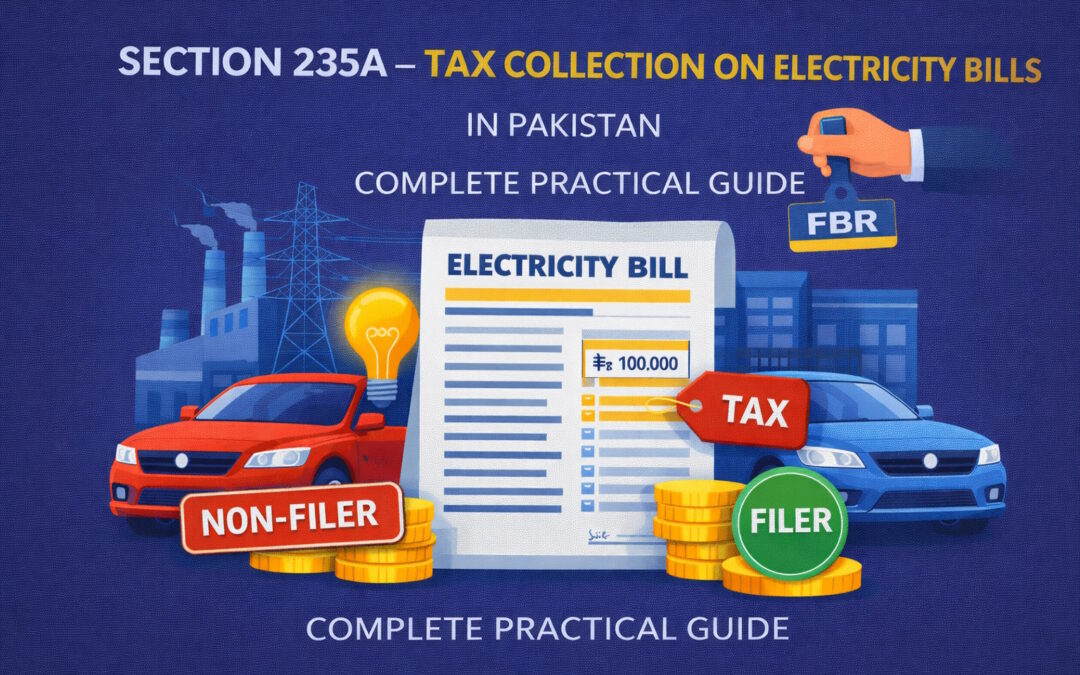
Section 235A – Tax Collection on Electricity Bills in Pakistan (Complete Practical Guide)
Introduction
Section 235A of the Income Tax Ordinance, 2001 provides for collection of advance income tax through electricity bills. This section primarily targets commercial and industrial electricity consumers and is designed to bring undocumented business activity into the tax net.
The tax is collected by electricity distribution companies (DISCOs) on behalf of the Federal Board of Revenue (FBR) and is reflected directly on monthly electricity bills.
What is Section 235A?
Section 235A mandates the collection of advance income tax from certain electricity consumers based on the amount of electricity bill issued during a tax period.
This tax is collected irrespective of profit or loss and is linked with electricity consumption.
Who is Covered under Section 235A
This section generally applies to:
- Commercial electricity connections
- Industrial electricity connections
- Businesses operating shops, factories, offices, and plazas
- Persons using electricity for business purposes
Domestic residential consumers are generally excluded, unless notified otherwise by law.
Tax Collection Authority
Tax under Section 235A is collected by:
Electricity supply companies, Such as K-Electric, LESCO, IESCO, FESCO, etc. On behalf of FBR
The amount is included in the monthly electricity bill.
Basis of Tax Calculation
Advance tax under Section 235A is calculated based on:
- Amount of monthly electricity bill
- Nature of electricity connection
- Prescribed thresholds under the law
Higher electricity consumption results in higher advance tax.
Filer vs Non-Filer Treatment
Tax rates under Section 235A differ based on filer status:
Filers are charged lower advance tax
Non-filers are charged higher tax
Maintaining Active Taxpayer List (ATL) status helps reduce tax burden on electricity bills.
Nature of Tax under Section 235A
The nature of tax depends on the status of the taxpayer:
For active filers – tax is generally adjustable
For non-filers – tax may act as minimum tax until return is filed
Adjustment is claimed in the annual income tax return.
Adjustment in Income Tax Return
Tax collected under Section 235A can be:
- Declared as adjustable tax
- Set off against final income tax liability
- Claimed as refund if excess tax is paid
Proper documentation of electricity bills is required.
Practical Impact on Businesses
Section 235A affects businesses by:
- Increasing monthly operating costs
- Encouraging tax registration
- Linking utility usage with tax compliance
- Identifying undocumented commercial activity
Common Mistakes by Taxpayers
- Ignoring tax charged in electricity bills
- Failing to claim adjustment in annual return
- Not maintaining filer status
- Using commercial meters for personal use
Relationship with Business Documentation
Electricity bills serve as:
- Proof of business operation
- Evidence of commercial activity
- Supporting documents during audits
Mismatch between declared income and electricity usage may trigger FBR scrutiny.
Conclusion
Pakistan Practical Taxation Course Post 15 FI
Section 235A ensures the advance collection of income tax through electricity bills and plays a significant role in documenting commercial activity in Pakistan. Businesses should maintain a filer status, keep proper records, and correctly adjust this tax in their annual returns to avoid unnecessary financial burden.
Instructor
This Practical Taxation Course is prepared by:
Muhammad Taha Farooq
APFA | ITP
Previous Post Pakistan Practical Taxation Course Post 14
Next Post Pakistan Practical Taxation Course Post 16