Pakistan Practical Taxation Course Post 13
Post 13
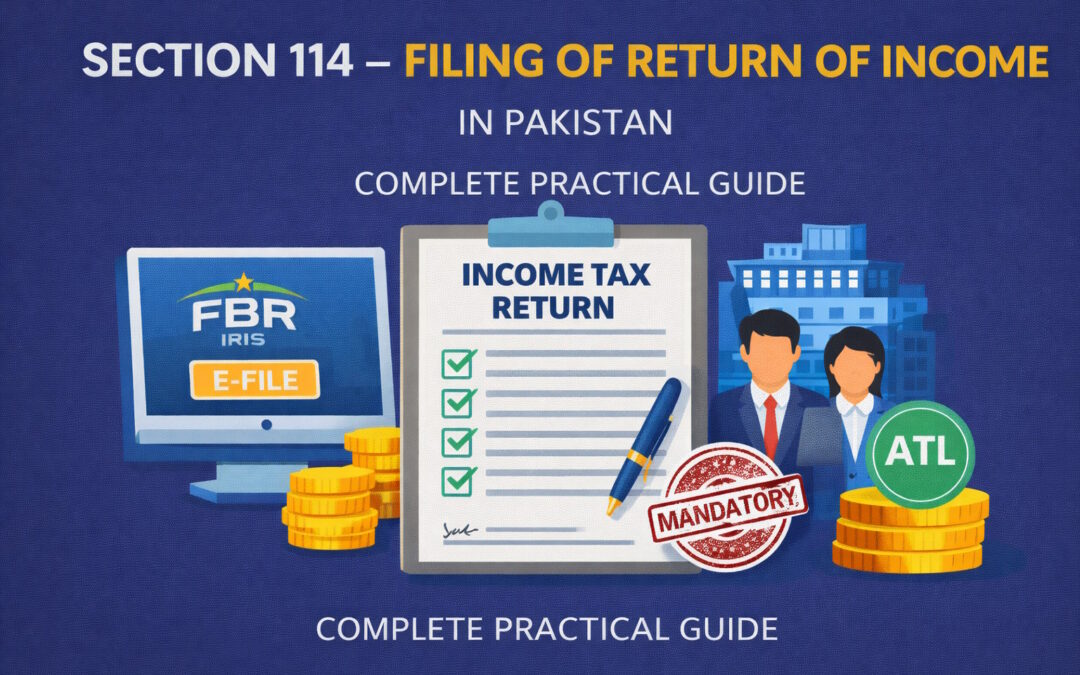
Section 114 – Filing of Return of Income in Pakistan (Complete Practical Guide)
Introduction
Section 114 of the Income Tax Ordinance, 2001 lays down the legal obligation to file a return of income in Pakistan. This section forms the backbone of Pakistan’s tax compliance framework and applies to salaried persons, business individuals, companies, and other taxable persons.
Filing a return not only fulfills a legal duty but also enables taxpayers to appear on the Active Taxpayers List (ATL) and avoid higher tax rates across multiple transactions.
What is a Return of Income?
A return of income is a formal declaration submitted to the Federal Board of Revenue (FBR) that includes:
- Income earned during the tax year
- Tax deductions and adjustments
- Tax payments made
- Wealth statement where applicable
The return is filed electronically through the FBR IRIS portal.
Who is Required to File Return under Section 114
Under Section 114, the following persons are required to file a return of income:
- Individuals earning taxable salary
- Business individuals and sole proprietors
- Companies registered in Pakistan
- Association of Persons (AOPs)
- Persons owning immovable property above prescribed limits
- Persons having bank accounts with substantial transactions
- Persons holding NTN or registered with FBR
Even if income is exempt or below taxable limits, filing may still be mandatory based on assets or transactions.
Types of Returns under Section 114
Different categories of taxpayers file different types of returns, including:
- Return of income for salaried individuals
- Return of income for business individuals
- Return of income for companies
- Return of income for AOPs
Each return type has specific disclosure and documentation requirements.
Due Dates for Filing Return of Income
The standard due dates are:
- Salaried individuals – by 30th September
- Business individuals – by 30th September
- Companies – by 31st December
FBR may extend deadlines through official notifications.
Electronic Filing through IRIS
Returns under Section 114 are filed online through the IRIS system. The process includes:
- Login to IRIS portal.
- Go to declaration tab in horizontal menu bar
- Select the correct form for filing
- Selection of correct tax year
- Declaration of income and expenses
- Adjustment of taxes deducted
- Submission of wealth statement where required
Proper reconciliation of income and taxes is essential to avoid notices.
Relationship with Wealth Statement
For individuals with taxable income or assets above the threshold, filing of Wealth Statement under Section 116 is mandatory along with the return of income.
Mismatch between income and wealth can trigger audits and inquiries.
Consequences of Non-Filing
Failure to file a return under Section 114 can result in:
- Penalty under Section 182
- Removal from Active Taxpayers List
- Higher withholding and advance tax rates
- Restriction on banking and property transactions
- Selection for audit or enforcement proceedings
Benefits of Filing Return of Income
Filing returns provides multiple benefits:
- Lower tax rates on transactions
- Eligibility for refunds
- Compliance with legal requirements
- Ease in banking, visa, and financial matters
- Protection from unnecessary penalties
Common Mistakes in Return Filing
- Selection of incorrect form
- Using incorrect tax year
- Not declaring all income sources
- Failure to reconcile withholding taxes
- Ignoring wealth statement requirements
- Late filing without valid extension
Practical Importance of Section 114
Understanding Section 114 is critical for:
- Salaried professionals
- Business owners and traders
- Freelancers and consultants
- Companies and partnerships
Correct and timely filing ensures smooth tax compliance and financial credibility.
Conclusion
Pakistan Practical Taxation Course Post 13 FI
Section 114 establishes the foundation of Pakistan’s income tax system by making return filing mandatory. Timely and accurate filing protects taxpayers from penalties, ensures ATL status, and promotes transparency in financial dealings.
Instructor
This Practical Taxation Course is prepared by:
Muhammad Taha Farooq
APFA | ITP
Previous post Pakistan Practical Taxation Course Post 12
Next Post Pakistan Practical Taxation Course Post 14