Pakistan Practical Taxation Course Post 12
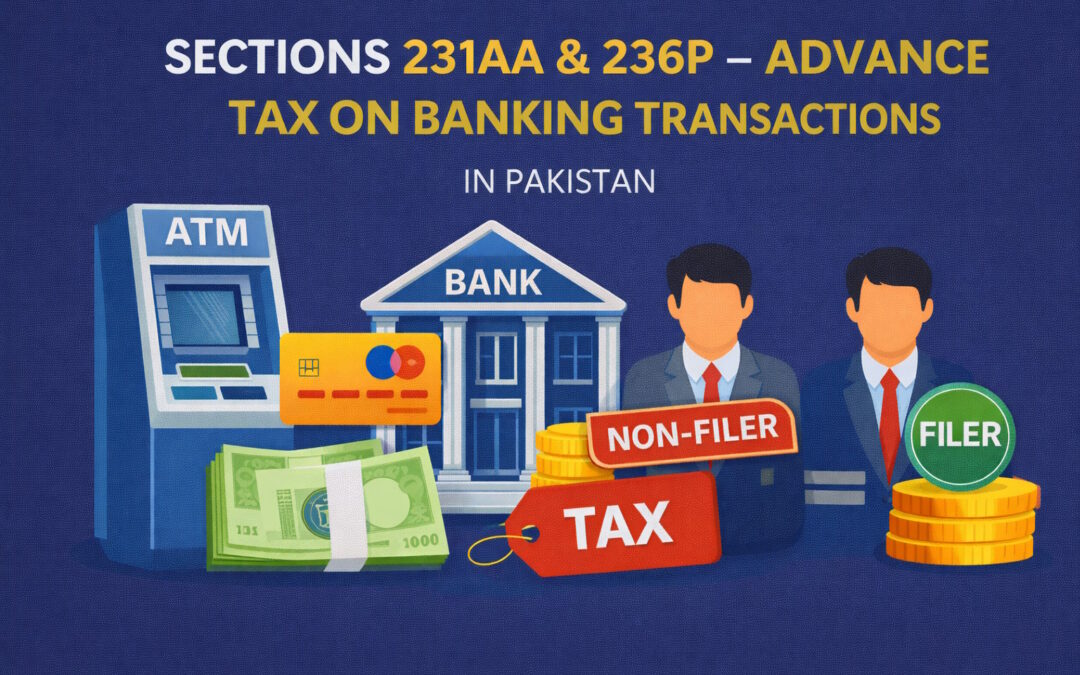
Section 231AA & Section 236P – Advance Tax on Banking Transactions in Pakistan
Introduction
Banking transactions in Pakistan are closely monitored for tax compliance, especially for individuals and businesses that are not active income tax filers. Sections 231AA and 236P of the Income Tax Ordinance, 2001, empower banks to collect advance tax on certain transactions to widen the tax base and encourage documentation of the economy.
This post explains how these sections work, who is affected, applicable tax rates, and how taxpayers can avoid unnecessary deductions.
Overview of Section 231AA
Section 231AA applies to cash withdrawals from banks made by persons who are not appearing on the Active Taxpayers List (ATL).
The objective of this section is to discourage undocumented cash-based transactions and push individuals toward becoming registered tax filers.
Who is Covered Under Section 231AA
This section applies when:
The person withdrawing cash is not on the Active Taxpayers List
The withdrawal is made from a scheduled bank
The aggregate cash withdrawal exceeds the prescribed threshold
It applies to individuals, sole proprietors, and businesses that are non-filers.
Threshold and Tax Rate Under Section 231AA
Currently, advance tax is deducted when cash withdrawals exceed the annual threshold prescribed by law.
The tax is deducted at a higher rate for non-filers and is collected by the bank at the time of withdrawal.
This tax is treated as adjustable tax, meaning it can be adjusted against final tax liability once the person files their income tax return.
Impact of Section 231AA on Non-Filers
- Frequent cash withdrawals can result in significant tax deductions
- Creates cash flow pressure for businesses operating outside the tax net
- Encourages registration with FBR and return filing
- Once a person becomes an active filer, this deduction no longer applies.
Overview of Section 236P
Section 236P relates to advance tax on banking transactions other than cash withdrawals, particularly transactions conducted by non-filers through banks.
It targets financial activity where income is presumed but not declared.
Transactions Covered Under Section 236P
This section generally applies to:
- Banking transactions exceeding prescribed limits
- Transactions conducted by non-filers
- Specific categories of bank-based payments as notified by FBR
- Banks act as withholding agents and deduct tax automatically.
Tax Nature Under Section 236P
The tax collected under Section 236P is usually adjustable, allowing taxpayers to claim credit when filing their annual return.
However, failure to file returns results in the tax becoming a cost rather than a recoverable adjustment.
Filer vs Non-Filer Treatment
- Filers enjoy lower or zero deduction on most banking transactions
- Non-filers face higher advance tax rates
- ATL status plays a critical role in determining tax impact
- Maintaining filer status significantly reduces banking-related tax deductions.
How to Avoid Advance Tax on Banking Transactions
To avoid unnecessary deductions under Sections 231AA and 236P:
- Register with FBR
- File annual income tax returns on time
- Ensure your name appears on the Active Taxpayers List
- Avoid excessive cash transactions
- Use documented banking channels properly
Practical Importance for Businesses and Individuals
Understanding these sections is essential for:
- Small business owners
- Freelancers and consultants
- Cash-based traders
- Professionals using personal bank accounts
- Ignoring these provisions can result in heavy tax deductions without realizing the reason.
Conclusion
Pakistan Practical Taxation Course Post 12 FI
Sections 231AA and 236P play a vital role in Pakistan’s tax enforcement framework by targeting undocumented banking activity. While these provisions increase the cost of remaining a non-filer, they also provide a clear incentive to enter the formal tax system and enjoy smoother banking operations.
Previous Post Pakistan Practical Taxation Course Post 11
Next Post Pakistan Practical Taxation Course Post 13