Pakistan Practical Taxation Course Post 11
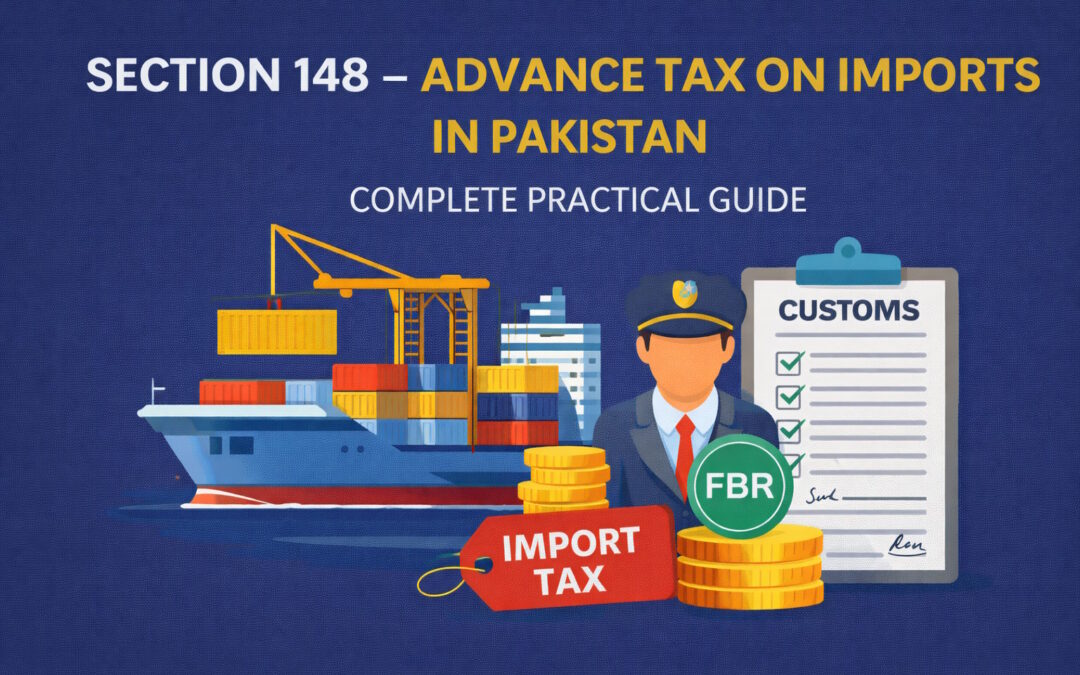
Section 148 – Advance Income Tax on Imports in Pakistan (Complete Practical Guide)
Introduction
Section 148 of the Income Tax Ordinance, 2001 deals with advance income tax collected at the time of import of goods into Pakistan. This provision directly impacts importers, traders, manufacturers, and commercial entities engaged in international trade.
Tax under Section 148 is collected by Pakistan Customs at the time of clearance of imported goods and plays a major role in Pakistan’s advance tax and minimum tax regime.
What is Section 148 – Import Tax?
Section 148 requires the collection of advance income tax on the value of imported goods at the time of customs clearance.
This tax is collected before goods are released, ensuring advance revenue for FBR.
Who is Liable under Section 148?
Advance tax under Section 148 applies to:
• Commercial importers
• Manufacturers importing raw materials
• Trading companies
• Individuals importing goods for business purposes
Personal baggage and non-commercial imports are generally excluded, subject to customs rules.
Tax Collection Authority
Tax under Section 148 is collected by:
• Pakistan Customs
• On behalf of Federal Board of Revenue (FBR)
The tax is paid along with customs duties and sales tax at the import stage.
Basis of Tax Calculation
Advance tax under Section 148 is calculated on:
• Import value
• As determined under the Customs Act
• Including assessable value and applicable duties
The tax is calculated on gross import value, not on profit.
Filer vs Non-Filer Rates
Tax rates under Section 148 differ based on filer status:
• Filers are charged lower rates
• Non-filers are charged significantly higher rates
Maintaining active filer status is crucial for importers to reduce tax cost.
Nature of Tax under Section 148
The nature of tax depends on the type of importer:
• For commercial importers – tax is generally minimum tax
• For manufacturers – tax is often adjustable
• For non-filers – tax may be treated as final
Correct classification is essential for adjustment and refund claims.
Adjustment in Income Tax Return
For adjustable cases:
• Section 148 tax is declared in the adjustable tax section
• It reduces final income tax liability
• Excess tax may result in a refund
For minimum tax cases:
• Tax may not be refundable
• It satisfies minimum tax obligation
Exemptions and Reduced Rates
Certain exemptions or reduced rates may apply for:
• Industrial raw materials
• Export-oriented units
• Government-approved schemes
• Specific SROs and notifications
Proper documentation is mandatory to claim exemptions.
Common Mistakes in Import Tax
• Ignoring filer status before import
• Wrong assumption that Section 148 tax is final
• Failure to adjust tax in annual return
• Incorrect importer classification
• Missing supporting import documents
Practical Importance of Section 148
Understanding Section 148 helps importers:
• Plan import costs accurately
• Manage cash flow
• Avoid excess taxation
• File correct income tax returns
• Maintain compliance with FBR
Conclusion
Pakistan Practical Taxation Course Post 11 FI
Section 148 ensures advance collection of income tax at the import stage and significantly affects business profitability. Importers must understand rates, nature of tax, and adjustment rules to avoid unnecessary tax burden and compliance issues.
Instructor
This Practical Taxation Course is prepared by:
Muhammad Taha Farooq
APFA | ITP
Previous Post Pakistan Practical Taxation Course Post 10
Next Post Pakistan Practical Taxation Course Post 12