Pakistan Practical Taxation Course Post 4
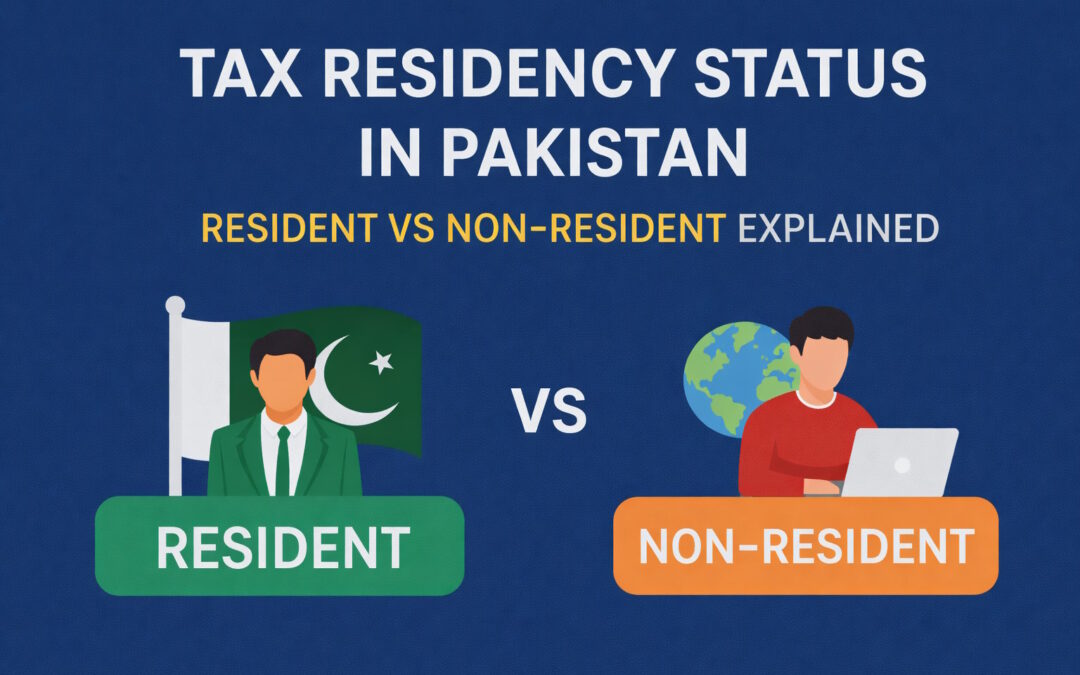
Title: Tax Residency Status in Pakistan – Resident vs Non-Resident Explained
Tax residency status plays a critical role in determining tax liability in Pakistan. Many taxpayers, overseas Pakistanis, freelancers, and salaried individuals misunderstand whether they are treated as resident or non-resident under the Pakistan tax law.
This post explains tax residency rules under the Income Tax Ordinance, 2001, in simple language with practical clarity.
What Is Tax Residency in Pakistan?
Tax residency determines which income is taxable in Pakistan. A person may be treated as:
• Resident individual
• Non-resident individual
Residency status is determined each tax year separately, not permanently.
Who Is a Resident Individual in Pakistan?
An individual is considered resident in Pakistan if any one of the following conditions is met during a tax year:
• The individual stays in Pakistan for 183 days or more
• The individual stays 120 days or more in the current tax year and 365 days in the preceding four tax years
• The individual is a Pakistani government employee posted abroad
Resident individuals are taxed on worldwide income, including foreign income.
Who Is a Non-Resident Individual?
An individual is considered non-resident if they do not meet any residency condition.
Non-residents are taxed only on Pakistan-source income, such as:
• Salary earned in Pakistan
• Property rental income in Pakistan
• Business income attributable to Pakistan
• Pakistan-source capital gains
Foreign income of non-residents is not taxable in Pakistan.
Why Residency Status Matters
Tax residency affects:
• Scope of taxable income
• Filing requirements
• Availability of tax credits
• Treatment of foreign income and remittances
• Application of double taxation treaties (DTAs)
Incorrect residency status can lead to wrong tax returns, penalties, or FBR notices.
Common Mistakes Taxpayers Make
• Assuming nationality determines residency
• Ignoring day-count rules
• Not reassessing residency every year
• Misreporting foreign income
• Filing incorrect wealth statements
Understanding residency correctly helps avoid legal and financial issues.
What’s Coming Next?
Pakistan Practical Taxation Course Post 4 FI
In Post 5, we will cover Heads of Income under the Income Tax Ordinance, 2001, starting with an overview before moving into salary, property, business, and capital gains.
Previous Post Pakistan Practical Taxation Course Post 3
Next Post Pakistan Practical Taxation Course Post 5