Pakistan Practical Taxation Course Post 3
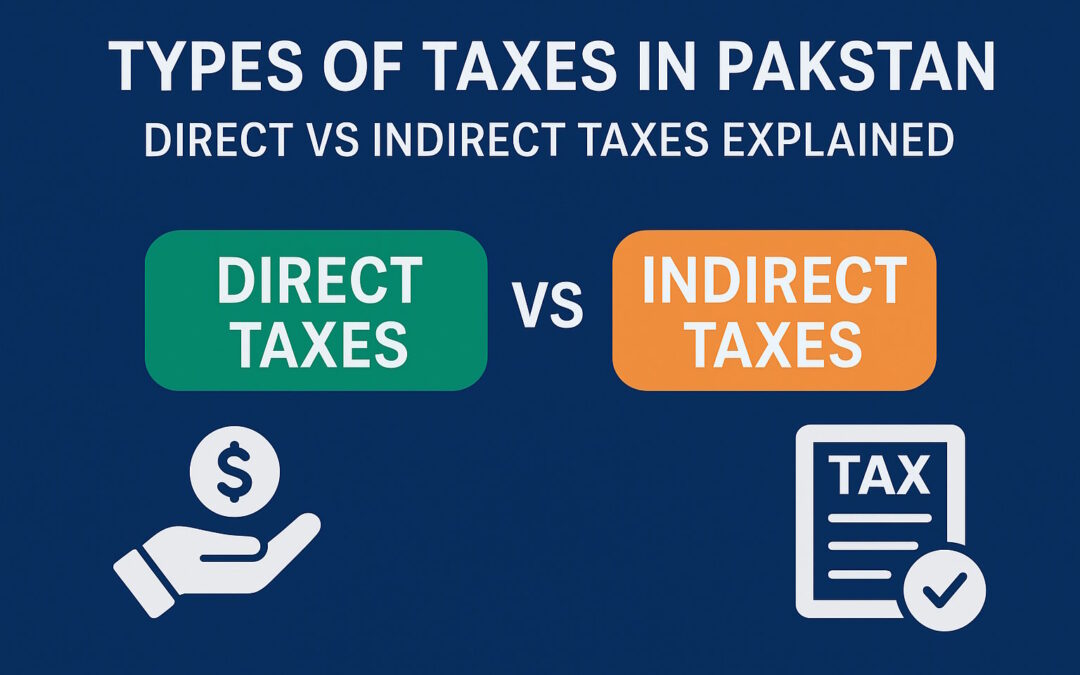
Title: Types of Taxes in Pakistan: Direct vs Indirect Taxes Explained
Pakistan’s taxation system is broadly divided into direct taxes and indirect taxes. Understanding this distinction is essential for taxpayers, students, freelancers, and business owners who want to comply with tax laws and optimize their tax planning.
This post explains both categories in simple terms with practical examples relevant to Pakistan.
What Are Direct Taxes in Pakistan?
Direct taxes are taxes that are paid directly by an individual or entity to the government. These taxes are imposed on income, profits, or wealth, and the burden of payment cannot be shifted to another person.
Common Examples of Direct Taxes
• Income Tax on salary
• Income Tax on business profits
• Tax on rental income
• Capital gains tax on property or shares
• Tax on professional income (doctors, consultants, freelancers)
In Pakistan, direct taxes are governed mainly under the Income Tax Ordinance, 2001 and administered by the Federal Board of Revenue (FBR).
What Are Indirect Taxes in Pakistan?
Indirect taxes are taxes that are collected by intermediaries and passed on to the final consumer. The tax burden is shifted to the end user through higher prices.
Common Examples of Indirect Taxes
• Sales Tax on goods and services
• Federal Excise Duty (FED)
• Customs Duty on imports
• Withholding sales tax on utilities and telecom services
Indirect taxes are regulated under laws such as the Sales Tax Act, 1990 and Federal Excise Act, 2005.
Key Differences Between Direct and Indirect Taxes
Direct taxes are based on income or wealth, while indirect taxes are based on consumption.
Direct taxes are progressive in nature, whereas indirect taxes affect all consumers equally.
Direct taxes require annual filing, while indirect taxes are paid at the point of purchase.
Understanding this difference helps taxpayers know why taxes are deducted from salary, why sales tax appears on bills, and how tax credits or refunds may apply.
Why This Knowledge Matters for Taxpayers
Knowing whether a tax is direct or indirect helps you:
• Identify your tax obligations
• Understand withholding deductions
• Plan tax savings legally
• Avoid penalties and notices from FBR
This clarity is especially important for freelancers, small businesses, and salaried individuals in Pakistan.
What’s Coming Next?
Pakistan Practical Taxation Course Post 3 FI
In the next post, we will discuss Tax Residency Status in Pakistan and how it impacts your tax liability.
Previous Post Pakistan Practical Taxation Course Post 2
Next Post Pakistan Practical Taxation Course Post 4