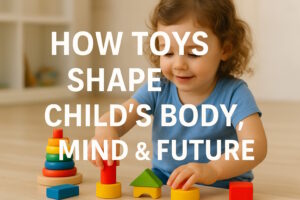
How Toys Shape a Child’s Body, Mind & Future
Introduction
From the moment a child picks up their first block or rattle, play begins to work in ways far deeper than mere fun. The toys children engage with play a vital role in shaping their physical strength, mental acuity, and emotional resilience. In this post, we’ll explore how toys impact children’s health and development—and how parents can choose wisely (with a little help from resources like the blog at zaminotoys.in).
1. The Physical Benefits of Play
- Gross motor development: When toddlers crawl, run, throw or stack toys, they use large muscle groups. This builds coordination, balance, and core strength.
- Fine motor development: Manipulating smaller toys—say, blocks, pegs, or puzzle pieces—improves hand-eye coordination, dexterity and the neural connections between eyes, brain, and hands.
- Movement & active play: Toys that encourage movement or changes in position (ride-ons, push toys, ball games) counter today’s increasing inactivity and help maintain a healthy weight, strong bones, and joints.
- Sensory and body awareness: Many toys stimulate touch, texture, and spatial awareness (for example, sensory boards or textured blocks). This helps the child become aware of their limbs, surroundings, and how they interact physically with the world.
2. The Cognitive & Mental Health Benefits of Play
- Brain wiring and development: From infancy, children build neural pathways by experiencing new textures, sounds, and movements. Toys that encourage exploration support this process. For example, one guide notes how sensory-rich toys support infant brain development. (zaminotoys.in)
- Problem-solving skills and creativity: Toys that require ordering, building, and trial-and-error (blocks, construction sets, puzzles) help children learn how to think, plan, anticipate outcomes, and adapt.
- Language and social skills: Toys that invite role-play, conversation, or shared activity encourage children to verbalize, interpret interactions, and model behavior—preparing them for social situations and communication.
- Emotional regulation and confidence: Achieving something (“I built this tower”) or engaging in pretend-play helps children feel capable, imaginative, and confident. Fewer frustrations, better resilience.
- Screen-free alternatives for mental well-being: In a time of rising screen exposure, toys offer tactile, real-world engagement. The blog at Zaminotoys highlights the importance of “screen-free toys: a parenting expert’s guide to bringing back real play.” (zaminotoys.in)
3. Choosing Toys That Support Health & Development
- Age-appropriate selection: Toy guides by age are essential. For example, Zaminotoys provides age‐wise recommendations from infancy through toddler and pre-school years. (zaminotoys.in)
- Safety and quality: Non-toxic materials, sturdy construction, no choking hazards are key. A sensory toys guide for 0-6 months emphasizes safety above all. (zaminotoys.in)
- Open-ended vs fixed play: Toys that can be used in multiple ways (blocks, clay, fabrics) encourage creativity and longer-term value.
- Mix of physical + mental play: Balance toys that encourage movement with toys that invite thinking or social interaction.
- Parental involvement: The best play happens when a caregiver participates, narrates, asks questions, and joins in. It’s not only the toy itself, but the interaction that counts.
4. The Marketing Section: Partner Resource
If you’re looking for a reliable resource to guide toy selection and parenting tips, you may want to check out Zaminotoys. The site offers expert-backed articles on age-wise toy guides, DIY sensory toys, safe materials, and how to support your child’s mental and physical development through play.
Whether you’re a parent, grandparen,t or caregiver, the information there can help you make smarter, healthier choices for your child’s play time.
5. Summary & Practical Take-aways
- Toy time = development time. Physical movement, sensory play and creative thinking all benefit from the right toys and interaction.
- Choose toys with purpose: those that support motor skills, brain growth, social/emotional health—not just entertainment.
- Rotate toys and maintain a safe, engaging environment—two or three well-chosen toys can be far more effective than dozens of generic ones.
- Join your child in play. Your engagement matters more than the most expensive toy.
- Use trusted resources (like Zaminotoys) to stay informed on toy trends, safety and age-appropriate choices.
Closing
Day 1 Post FI
In the journey of childhood, toys may seem like simple objects—but their impact is profound. They are tools of growth, vehicles of discovery, and keys to happy, healthy development. By choosing thoughtfully and playing together, you set the stage for a child who not only thrives physically but also learns with curiosity, connects with confidence, and enjoys the wonder of growing up.
Here’s to joyful play—and to purposeful choices.