Pakistan Practical Taxation Course Post 6
Title
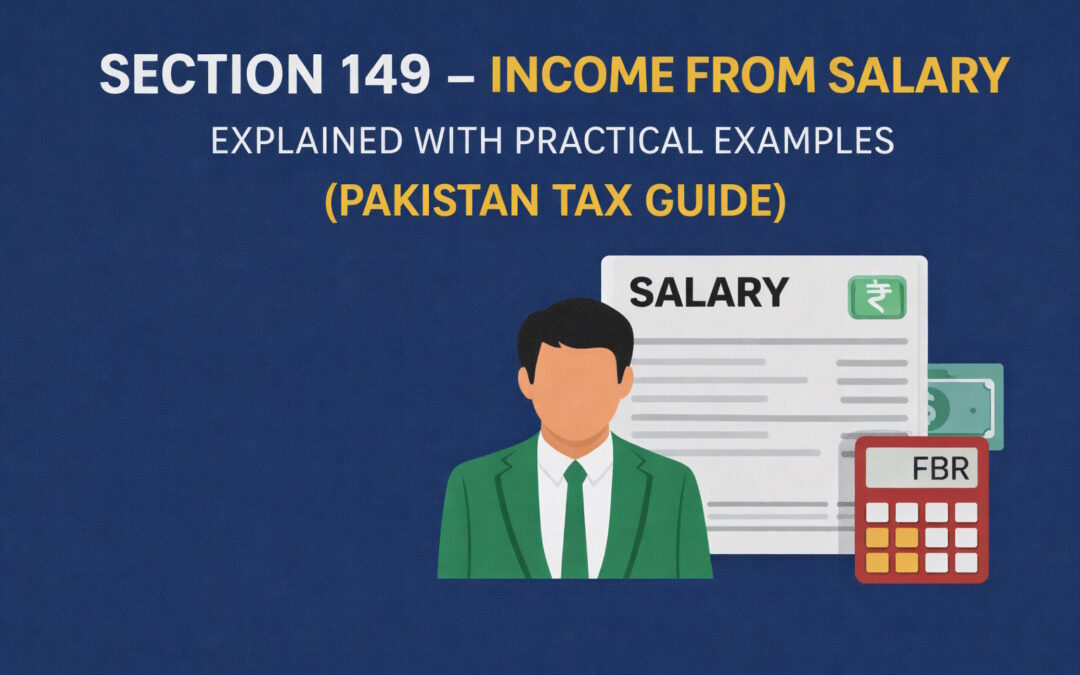
Section 149 – Income from Salary Explained with Practical Examples (Pakistan Tax Guide)
Introduction
Salary income is the most common source of income in Pakistan, and Section 149 of the Income Tax Ordinance, 2001 governs how tax is deducted from salaries.
Almost every salaried individual faces tax deduction by their employer, but very few understand how salary tax is calculated, adjusted, and reported in annual returns.
In this post, we will explain Section 149 in simple language with practical clarity.
What Is Section 149 – Income from Salary
Section 149 deals with tax deduction at source on salary income. Under this section, the employer is legally responsible to deduct income tax from the employee’s salary and deposit it with FBR.
The tax deducted under Section 149 is generally adjustable, meaning it is adjusted against the employee’s final annual tax liability.
What Is Considered Salary Income
Salary income includes much more than just basic pay.
Salary includes:
• Basic salary
• Allowances
• Bonuses
• Overtime
• Perquisites
• Benefits in kind
• Medical allowance (subject to limits)
• Company-provided assets or accommodation
Anything received from an employer due to employment is treated as salary unless specifically exempt.
Who Is Responsible for Deducting Salary Tax
Under Section 149:
• The employer is responsible for calculating tax
• The employer deducts tax on a monthly basis
• The employer deposits tax with FBR
• The employer reports tax in withholding statements
Failure to deduct or deposit tax can result in penalties and legal action against the employer.
Salary Tax Calculation Method
Salary tax is calculated on an annual basis, even though it is deducted monthly.
The general process is:
• Estimate annual gross salary
• Subtract allowable exemptions and deductions
• Apply applicable tax slabs
• Divide annual tax by number of months
• Deduct monthly tax from salary
This ensures equal tax deduction throughout the year.
Tax Slabs for Salaried Individuals
Salaried individuals are taxed under separate tax slabs, which are usually lower than non-salaried individuals.
Tax slabs may change every year through the Finance Act, so employers must apply current tax rates.
Exemptions and Allowances in Salary
Certain allowances and benefits are either fully exempt or partially exempt, such as:
• Medical allowance (up to prescribed limit)
• Employer contribution to the approved provident fund
• Certain reimbursements
• Official perquisites
Correct treatment of exemptions reduces excess tax deduction.
Adjustable vs Final Tax
Tax deducted under Section 149 is adjustable, meaning:
• It is adjusted in the annual income tax return
• Excess tax can be refunded
• The taxpayer must pay the shortfall
This is different from final tax regimes, where no adjustment is allowed.
Salary Income in Annual Tax Return
Every salaried individual must:
• Declare gross salary
• Declare tax deducted by the employer
• File annual income tax return
• File wealth statement (where applicable)
Even if tax is fully deducted, filing a return is still mandatory to remain an active filer.
Common Mistakes in Salary Tax
• Not filing a return because tax was deducted
• Incorrect reporting of salary figures
• Ignoring bonuses and benefits
• Not reconciling employer tax certificates
• Missing refund claims
These mistakes often result in FBR notices or blocked refunds.
Practical Importance of Section 149
Understanding Section 149 helps you:
• Verify correct tax deduction
• Avoid excess tax payment
• Claim refunds properly
• File accurate tax returns
• Respond confidently to FBR notices
What’s Coming Next
Pakistan Practical Taxation Course Post 6 FI
In Post 7, we will cover:
Section 155 – Income from Property (Rental Income Tax with Examples)
Previous Post Pakistan Practical Taxation Course Post 5
Next Post Pakistan Practical Taxation Course Post 7