Pakistan Practical Taxation Course Post 18
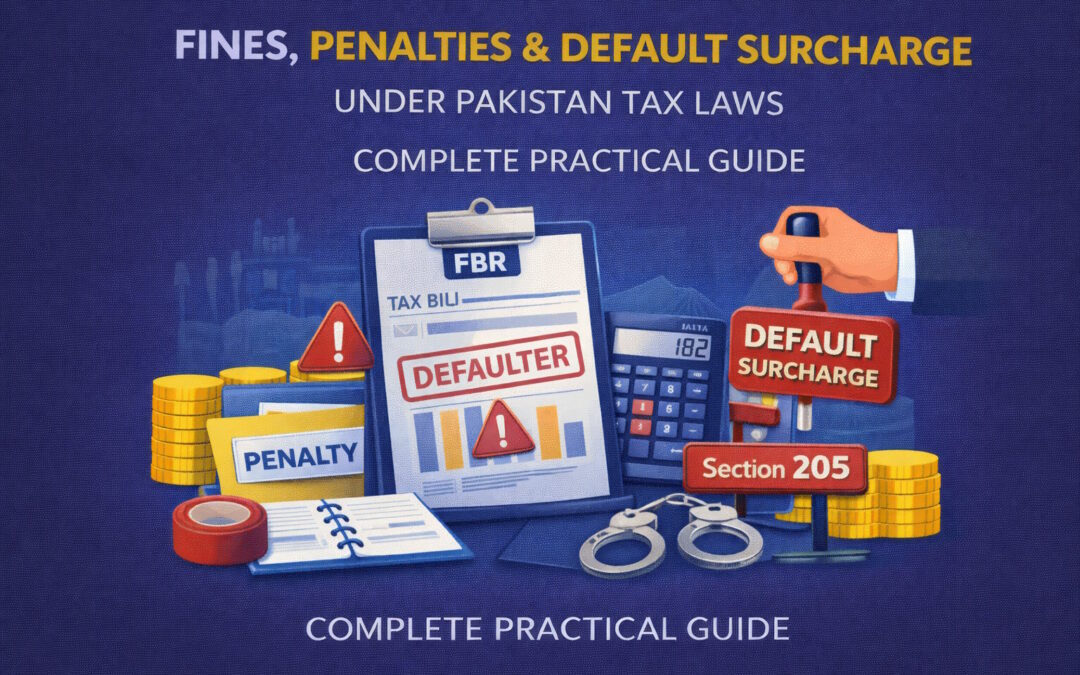
Post 18 – Fines, Penalties & Default Surcharge under Pakistan Tax Laws
Introduction
Fines, penalties, and default surcharge are enforcement tools used by the Federal Board of Revenue (FBR) to ensure compliance with Pakistan’s tax laws. Many taxpayers unknowingly incur heavy penalties due to late filing, non-filing, or incorrect reporting.
Understanding these provisions is essential for tax professionals, businesses, and individuals to avoid unnecessary financial loss.
Difference Between Fine, Penalty & Default Surcharge
Fine
A fixed monetary charge imposed for specific non-compliance, such as failure to submit statements or documents.
Penalty
A punishment imposed for serious violations like concealment of income, false statements, or failure to deduct tax.
Default Surcharge
An additional amount charged for late payment of tax, calculated on a time basis.
Default Surcharge – Section 205
Section 205 of the Income Tax Ordinance deals with default surcharge.
When Default Surcharge Applies
• Late payment of income tax
• Late payment of withholding tax
• Late payment of advance tax
• Tax shortfall discovered during assessment
Rate of Default Surcharge
Default surcharge is calculated at a prescribed annual rate on the unpaid tax amount for the period of delay. The rate is subject to change through Finance Acts.
It continues to accrue until the outstanding tax is fully paid.
Major Penalties Under the Income Tax Ordinance
Penalty for Late Filing of Return – Section 182
Applies when:
• Income tax return is filed after due date
• Wealth statement is not filed
• Statements are not furnished
Penalty may include:
• Fixed minimum penalty
• Percentage-based penalty linked to tax payable
• Daily penalties for continued default
Penalty for Non-Filing of Withholding Statements
Failure to file:
• Section 165 withholding statements
• Salary statements
• Monthly or quarterly statements
Results in:
• Per-day penalties
• Disallowance of business expenses
• Blocking of ATL status
Penalty for Failure to Deduct or Collect Tax
If a withholding agent:
• Fails to deduct tax
• Deducts but does not deposit tax
• Deposits tax late
FBR may impose:
• Principal tax liability
• Default surcharge
• Additional penalty
• Recovery proceedings
Penalty for Concealment of Income
This applies when:
• Income is hidden
• Expenses are falsely claimed
• Fake invoices are used
• Incorrect particulars are provided
Consequences include:
• Heavy penalties
• Best judgment assessment
• Prosecution in serious cases
Penalties Related to Sales Tax
Common sales tax penalties include:
• Late filing of sales tax return
• Non-payment of sales tax
• Wrong adjustment of input tax
• Fake or flying invoices
Sales tax penalties are often higher and more aggressive than income tax penalties.
Impact of Penalties on Taxpayers
• Increased financial burden
• Loss of filer status
• Increased audit risk
• Bank account restrictions
• Business reputation damage
How to Avoid Fines & Penalties
• File income tax return on time
• Submit wealth statement properly
• File withholding statements regularly
• Pay taxes within due dates
• Reconcile CPRs and returns
• Maintain proper documentation
Proactive compliance is always cheaper than reactive penalties.
Role of Tax Consultants
Professional tax advisors help:
• Avoid penalties
• Correct filing errors
• Respond to FBR notices
• Handle audits and reconciliations
This makes professional tax training and compliance knowledge extremely valuable.
Conclusion
Fines, penalties, and default surcharge can significantly increase tax liability if compliance is ignored. Understanding these provisions helps taxpayers plan better, remain compliant, and protect their finances.
For businesses and individuals alike, timely filing and accurate reporting are the best defenses against penalties.
Disclaimer

Pakistan Practical Taxation Course Post 18 FI
This article is for educational purposes only. Tax laws and penalty rates are subject to change under Finance Acts and FBR notifications. Readers should consult a qualified tax professional for case-specific advice.
Previous Post Pakistan Practical Taxation Course Post 17
Next Post Pakistan Practical Taxation Course Post 19