Pakistan Practical Taxation Course Post 21
Post 21
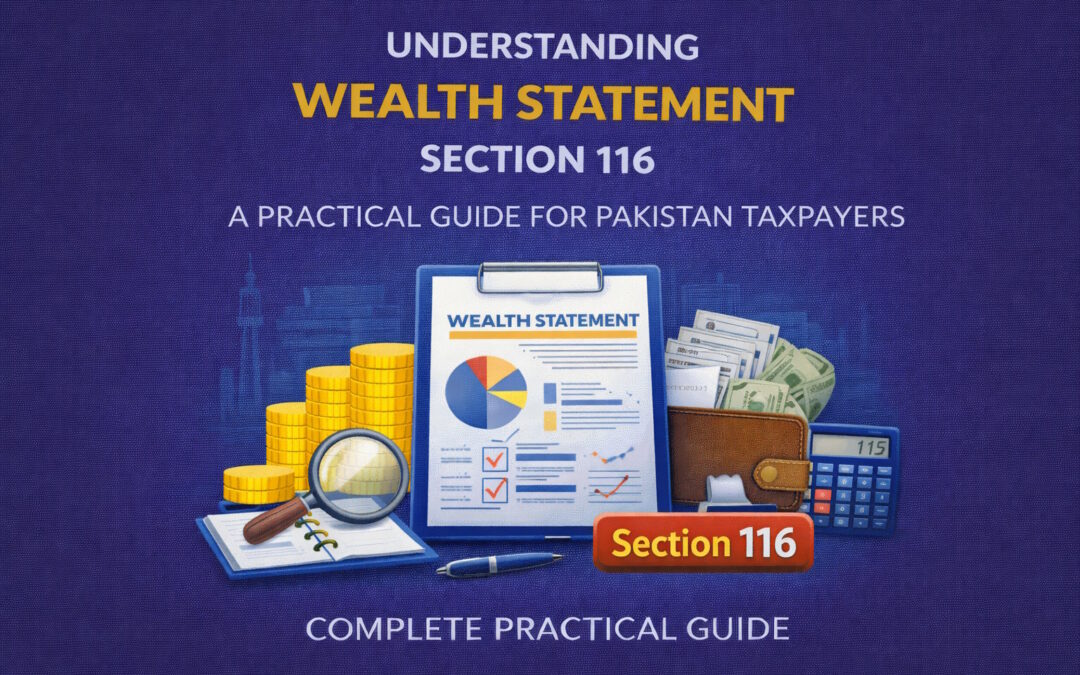
Understanding Wealth Statement (Section 116) – A Practical Guide for Pakistan Taxpayers
A wealth statement is one of the most critical compliance requirements under Pakistan’s tax laws. Many taxpayers file their income tax return correctly but still face notices and penalties due to errors or non-filing of the wealth statement. Section 116 of the Income Tax Ordinance, 2001 governs the requirement, scope, and importance of the wealth statement in Pakistan.
This post explains the concept in simple terms with a practical approach suitable for salaried individuals, business owners, and tax practitioners.
What Is a Wealth Statement
A wealth statement is a declaration of a taxpayer’s assets, liabilities, and changes in wealth during a tax year. It shows how a person’s assets were acquired and reconciles income with expenses and savings.
The Federal Board of Revenue uses the wealth statement to verify whether a taxpayer’s declared income supports their lifestyle and asset growth.
Who Is Required to File a Wealth Statement
A wealth statement is mandatory for:
- Individuals who file income tax returns
- Taxpayers whose wealth increases beyond declared income
- Persons who receive a notice under Section 116
- Individuals required to file wealth reconciliation statements
- Taxpayers selected for audit or amended assessment
Salaried individuals are not exempt. Even if tax is fully deducted at source, a wealth statement may still be required.
Components of a Wealth Statement
A complete wealth statement includes:
- Opening assets and liabilities
- Assets acquired during the year
- Assets disposed of during the year
- Closing assets and liabilities
- Personal expenses
- Sources of funds
- Reconciliation of wealth
Assets typically include property, vehicles, bank balances, investments, cash in hand, foreign assets, and loans given. Liabilities include loans, credit cards, and payables.
Wealth Reconciliation Explained
Wealth reconciliation explains how closing wealth is derived. The basic formula is:
- Opening Wealth + Plus income during the year – Less personal and household expenses = Equals closing wealth
If the reconciliation does not balance, FBR may issue notices under Section 116 or initiate proceedings under Section 122.
Common Mistakes in Wealth Statements
Some frequent errors include:
- Mismatch between income and asset growth
- Ignoring personal living expenses
- Not declaring bank balances correctly
- Failure to report loans and liabilities
- Incorrect opening balances from prior years
- Non-disclosure of foreign assets
These mistakes often lead to audits, penalties, and amended assessments.
Penalty for Non-Filing or Incorrect Filing
Failure to file a required wealth statement can result in:
- Penalty under Section 182
- Selection for audit under Section 177
- Amended assessment under Section 122
- Default surcharge under Section 205
Timely and accurate filing helps avoid unnecessary litigation and compliance issues.
Practical Tip for Taxpayers
Always maintain a yearly record of assets, bank statements, major purchases, loans, and personal expenses. This makes wealth statement preparation easier and defensible in case of audit.
For tax professionals, wealth reconciliation is a key skill and a major value-addition service for clients.
Conclusion
Pakistan Practical Taxation Course Post 21 FI
Section 116 plays a vital role in Pakistan’s tax compliance framework. A properly prepared wealth statement not only fulfills legal requirements but also protects taxpayers from audits, penalties, and unnecessary scrutiny by FBR.
Understanding and correctly filing a wealth statement is essential for every serious taxpayer and tax practitioner.
Previous Post Pakistan Practical Taxation Course Post 20
Next Post Pakistan Practical Taxation Course Post 22