Pakistan Practical Taxation Course Post 8
Post 8
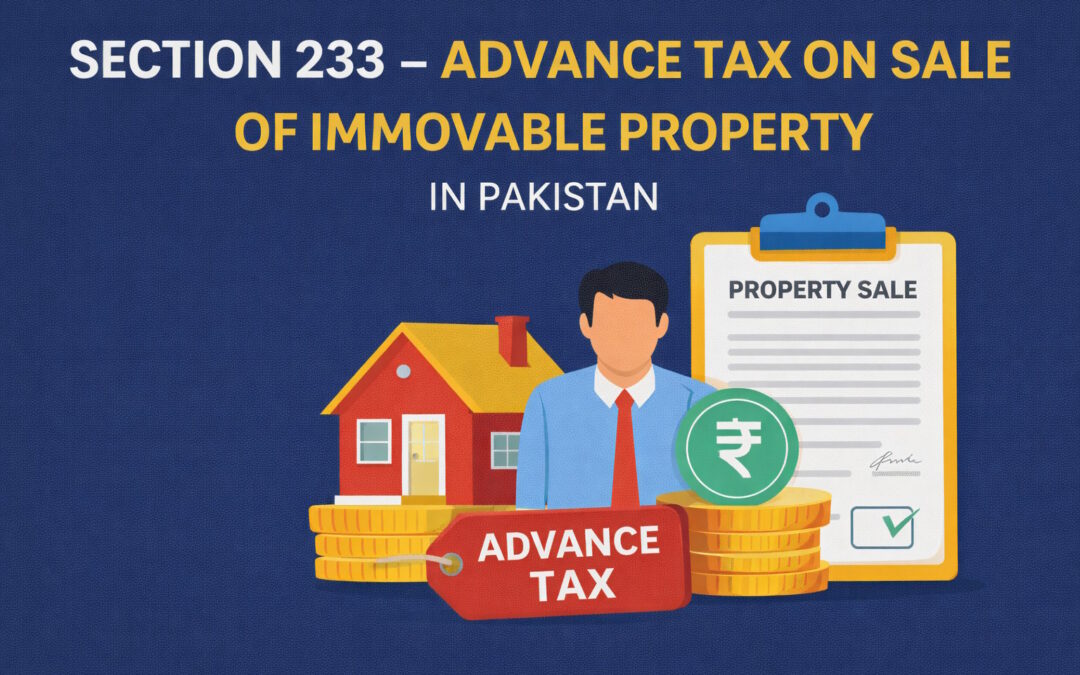
Section 233 – Advance Tax on Sale of Immovable Property in Pakistan
Introduction
Section 233 of the Income Tax Ordinance, 2001 governs the advance tax collected at the time of sale or transfer of immovable property in Pakistan. This provision is extremely important for property sellers, real estate investors, and tax practitioners, as tax is collected upfront before ownership is transferred.
This post explains who pays the tax, applicable rates, adjustment rules, exemptions, and practical treatment in income tax returns.
What is Section 233?
Section 233 empowers the tax authorities to collect advance income tax from the seller at the time of sale, transfer, or disposal of immovable property.
The tax is collected by:
• Registrar
• Sub-Registrar
• Housing authority
• Cooperative society
• Development authority
No property transfer can be completed unless this tax is paid.
Who is Liable to Pay Advance Tax under Section 233?
The seller of the immovable property is liable to pay advance tax under Section 233.
This applies to:
• Individuals
• Associations of Persons (AOPs)
• Companies
The tax applies to:
• Residential plots
• Commercial plots
• Houses
• Apartments
• Shops
• Any other immovable property
Advance Tax Rates under Section 233
The tax rates depend on whether the seller is a filer or non-filer and the value of the property as per FBR valuation or DC rate (whichever is higher).
Generally:
• Filers pay lower advance tax
• Non-filers pay significantly higher advance tax
Rates are applied on the gross sale value, not on gain or profit.
Nature of Tax under Section 233
Advance tax under Section 233 is:
• Adjustable for filers
• Adjustable against final income tax liability
• Non-adjustable for non-filers (in most cases)
For filers, this tax can be adjusted while filing the annual income tax return.
Adjustment in Income Tax Return
For filers:
• The amount paid under Section 233 is shown in the adjustable tax section
• It reduces the overall tax payable
• If excess tax is paid, it may result in a refund
For non-filers:
• Tax is generally treated as final
• No adjustment or refund is available
Capital Gain Tax vs Section 233
It is important to understand that:
• Section 233 is advance tax
• Capital Gain Tax (CGT) is separate
Even if advance tax under Section 233 is paid, capital gain tax on property may still apply, depending on holding period and nature of property.
Exemptions and Special Cases
Certain exemptions may apply, such as:
• Transfer through inheritance
• Gift to blood relatives (subject to conditions)
• Government-approved schemes
Proper documentation is essential to claim exemptions.
Practical Example
A filer sells a residential plot for PKR 10,000,000.
Advance tax is collected at the time of transfer as per the applicable filer rate.
This amount is later adjusted in the seller’s annual income tax return against the total tax liability.
Common Mistakes to Avoid
• Confusing Section 233 tax with capital gain tax
• Not claiming an adjustment in the tax return
• Using incorrect property valuation
• Selling property without checking filer status
Conclusion
Pakistan Practical Taxation Course Post 8 FI
Section 233 ensures the advance collection of tax on property transactions and plays a crucial role in real estate taxation in Pakistan. Sellers must understand its rates, adjustment mechanism, and reporting requirements to avoid penalties and excess taxation.
Previous Post Pakistan Practical Taxation Course Post 7
Next Post Pakistan Practical Taxation Course Post 9