Sales Tax in Pakistan
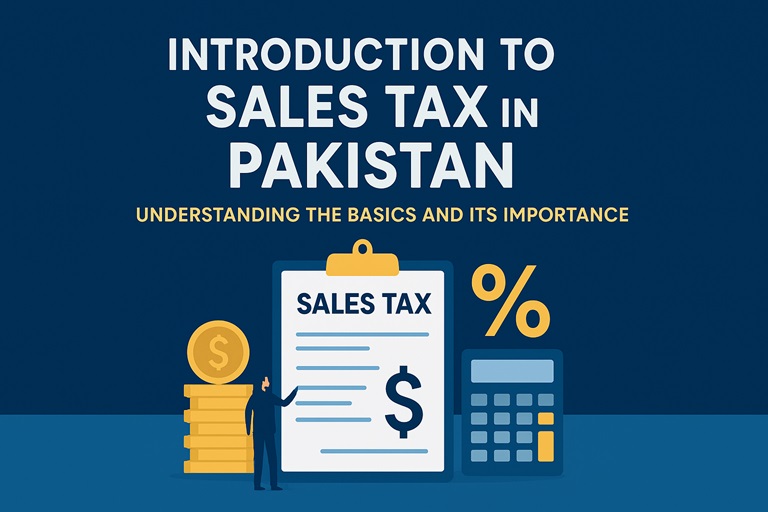
Day 1: Introduction to Sales Tax in Pakistan
Understanding the Basics and Its Importance for Businesses
Sales tax is one of the most significant indirect taxes in Pakistan, impacting almost every business and consumer. Whether you are running a small trading firm, a retail shop, or a large corporation, sales tax compliance is essential to avoid legal complications and to maintain smooth business operations.
This blog post marks the beginning of our 30-Day Sales Tax Filing & Compliance in Pakistan Course, where we’ll break down the entire process into easy-to-understand lessons. Today, we will cover the fundamentals of sales tax, why it exists, who it applies to, and how it affects both businesses and consumers.
What is Sales Tax?
Sales tax is an indirect tax imposed on the sale and purchase of goods and services in Pakistan. Unlike income tax, which is paid directly by individuals and companies on their earnings, sales tax is collected at each stage of the supply chain and ultimately borne by the final consumer.
For example:
- A manufacturer pays sales tax on raw materials.
- The wholesaler pays sales tax on goods purchased from the manufacturer.
- The retailer pays sales tax when buying from the wholesaler.
- Finally, the consumer pays sales tax at the retail stage, included in the price of the product.
This structure is known as the Value Added Tax (VAT) system.
Who is Required to Register for Sales Tax?
Not every person or business is required to register for sales tax. However, the following are compulsory registrants:
- Manufacturers whose turnover exceeds the prescribed threshold.
- Importers of taxable goods.
- Retailers, wholesalers, and distributors.
- Service providers in specific sectors where sales tax applies.
Businesses must register with the Federal Board of Revenue (FBR) to obtain a Sales Tax Registration Number (STRN). Without STRN, you cannot issue a tax invoice or claim input tax adjustments.
Importance of Sales Tax for Businesses
Sales tax is not just a legal obligation—it also builds credibility for businesses. Here’s why compliance is crucial:
- Avoid Penalties & Legal Action – Non-registration or failure to file sales tax returns can result in heavy penalties, notices, and even blacklisting by FBR.
- Input Tax Adjustments – Registered businesses can claim back the sales tax paid on purchases (input tax) against the tax collected on sales (output tax).
- Business Reputation – Clients, customers, and suppliers prefer dealing with tax-compliant entities.
- ATL Status – Registered and compliant businesses become part of the Active Taxpayer List (ATL), enjoying reduced tax rates on various transactions.
How Sales Tax Affects Consumers
While businesses collect and remit sales tax, the ultimate burden falls on consumers. Every time you buy a product or service subject to sales tax, you are paying this tax indirectly. For example, when purchasing a mobile phone, a large part of the price you pay goes to FBR as sales tax.
The Role of FBR in Sales Tax Collection
The Federal Board of Revenue (FBR) is the central authority for sales tax in Pakistan. Its responsibilities include:
- Collecting sales tax through registered persons.
- Monitoring compliance through audits and notices.
- Maintaining the sales tax return filing system via the IRIS portal.
- Imposing penalties on businesses that fail to comply.
Marketing & Practical Tip for Businesses
If you are starting a business in Pakistan, make sales tax compliance a part of your strategy from day one. Being tax compliant:
- Opens doors to government contracts and tenders.
- Gives you confidence in banking transactions and imports.
- Builds a trustworthy brand in the eyes of customers.
Many businesses suffer not because of poor sales, but because of non-compliance with tax regulations. Consider hiring a tax consultant or outsourcing your sales tax management to a professional to avoid mistakes.
What’s Next?
In tomorrow’s post (Day 2), we’ll explore “Sales Tax Registration Process” in detail—covering how to apply, documents required, and common mistakes to avoid.
Previous Post Final Checklist Before Filing Income Tax in Pakistan
Next Post Sales Tax Registration in Pakistan