FARTCOINUSDT – Probability Analysis for November 23, 2025
FARTCOIN / USDT — Probability Analysis (Nov 23, 2025)
Quick live snapshot (verify before trading)
- Current spot price (approx): $0.23 USDT (latest live quotes show ~ $0.22–$0.23). (CoinGecko)
- 24-hour trading volume: ~$120M–$140M USDT (high liquidity across CEXes). (CoinMarketCap)
- TradingView sentiment/chart context: TradingView shows the FARTCOIN/USDT trading page and perpetual markets (active idea stream and neutral/mixed technicals on short timeframes). (TradingView)
Note: crypto prices change quickly — always refresh TradingView/CoinGecko/CoinMarketCap (or your exchange) before placing trades. (CoinGecko)
Probability scenarios — daily/weekly/monthly (reproducible)
Thresholds used (you can reuse or adjust):
- Daily: ±3%
- Weekly: ±10%
- Monthly: ±25%
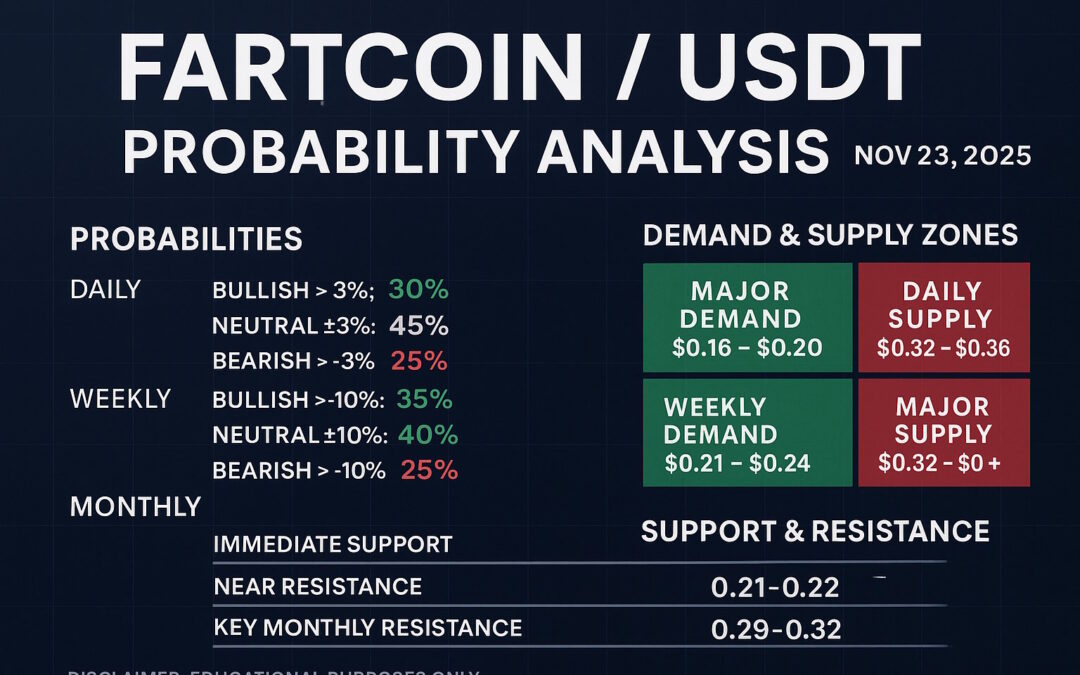
Daily (24-hour)
- Bullish (> +3%): 30%
- Neutral (±3%): 45%
- Bearish (> −3%): 25%
Why (daily): price sits inside the recent intraday band with no decisive breakout signal and the TradingView technicals are mixed/neutral. High intraday volume keeps both directions possible, so the largest single bucket is rangebound (neutral) with a meaningful rebound (bullish) chance. (CoinGecko)
Weekly (7-day)
- Bullish (> +10%): 35%
- Neutral (±10%): 40%
- Bearish (> −10%): 25%
Why (weekly): seven days gives room for catalysts (listings, social momentum, futures flows) to create a directional leg. Given active multi-exchange liquidity and perpetual/futures availability, the bullish tail is credible; neutral remains the modal outcome absent a clear breakout. (CoinGecko)
Monthly (30-day)
- Bullish (≥ +25%): 40%
- Neutral (±25%): 35%
- Bearish (> −25%): 25%
Why (monthly): meme coins often produce large month-to-month moves when community/listing momentum or leveraged squeezes occur. Over 30 days there’s enough runway for sizable up or down moves — current liquidity and futures markets raise the chance of a big move, hence a strong bullish tail but material downside risk remains. (CoinMarketCap)
Demand & Supply zones (multi-timeframe) — where buyers & sellers cluster
Zones are ranges (rectangles) on the chart — treat them as zones, not exact price lines. Confirm on your chart with volume and price reaction.
- Major (Monthly) Demand Zone: $0.16 – $0.20 USDT — long-term accumulation / deep pullback area. (CoinMarketCap)
- Weekly / Intermediate Demand Zone: $0.21 – $0.24 USDT — recent consolidation and reaction band; current price sits near this zone. (CoinGecko)
- Daily Demand (short): $0.18 – $0.21 USDT — intraday support and prior low wick area. (CoinGecko)
- Daily Supply (short): $0.29 – $0.32 USDT — intraday resistance / recent rejection band. (CoinGecko)
- Weekly Supply Zone: $0.29 – $0.33 USDT — local weekly highs where sellers previously stepped in. (CoinGecko)
- Major (Monthly) Supply Zone: $0.32 – $0.36+ USDT — higher-timeframe resistance from multi-week peaks. (CoinMarketCap)
Support & resistance — quick reference levels
- Immediate support (daily): $0.21–$0.22 USDT (weekly demand overlap). (CoinGecko)
- Near resistance (daily/weekly): $0.29–$0.32 USDT (watch for rejections). (CoinGecko)
- Key monthly resistance: $0.32–$0.36 USDT (major supply). (CoinMarketCap)
Trading cues
- Bullish trigger: a daily close above ~$0.32 on expanding volume → increase weekly/monthly bullish probability. (CoinGecko)
- Bearish trigger: decisive daily close below ~$0.20–$0.18 with heavy selling → shift probabilities toward bearish for weekly/monthly. (CoinGecko)
Methodology — how these probabilities were produced (reproducible)
- Fetch live inputs: current spot price, 24-h high/low, 24-h volume from CoinGecko / CoinMarketCap / your exchange. (CoinGecko)
- Baseline technicals: read TradingView’s indicator/technicals summary for the symbol and timeframe (gives Neutral/Buy/Sell consensus). (TradingView)
- Set scenario thresholds: daily ±3%, weekly ±10%, monthly ±25% (adjust for different risk/asset).
- Identify zones: draw rectangles around consolidation bases before big impulse moves (demand) and around clusters of swing highs/failed rallies (supply). Confirm with volume spikes on the original impulse. (CoinGecko)
- Assign baseline probabilities: when technicals are neutral, start neutral > bullish > bearish (e.g., 45/30/25). Shift buckets by: price position inside zones (closer to demand → raise bullish), volume/flow (large volume → raise tail probabilities), and presence of leveraged markets (futures/perps amplify moves). (TradingView)
- Recompute after events: refresh inputs and rerun the model if there’s a listing, viral social momentum, or major macro/regulatory news.
Risk & trade-management notes
- FARTCOIN is a high-volatility memecoin — use appropriate position sizing and defined stop losses.
- Perpetual/futures markets can cause rapid liquidation cascades — avoid excessive leverage unless you fully understand funding and margin mechanics. (TradingView)
- Re-evaluate probabilities after major events (listings, influencer/viral mentions, large whale flows).
Disclaimer
This post is educational and informational only. It is not financial, investment, or trading advice. Do not interpret it as a recommendation to buy, sell, or hold any asset. Always do your own research, assess your personal risk tolerance, and consult a licensed financial advisor if necessary.
Engage with One Web One Hub
FARTCOINUSDT Nov 23 2025 FI
At One Web One Hub, we publish daily, reproducible, practical market frameworks—probability models, demand/supply zone mapping, and risk-management checklists—so you can think clearly and trade smarter (not emotionally). Bookmark this post, subscribe for daily updates, and join the discussion — our community and visuals (featured images) make the learning process fast and shareable.
Sources/verification (use before trading)
CoinGecko (FARTCOIN live & historical snapshots). (CoinGecko)
CoinMarketCap (live price & 24-h volume snapshots). (CoinMarketCap)
TradingView — FARTCOIN/USDT spot & perpetual pages (technical summaries and idea stream). (TradingView)
General crypto market context & charting references. (CoinGecko)